the rested human™

The lotus journey

The
Pause
Practice

From the seed, through the mud,
toward the light.

Enter the journey
The original pink and white lotus from The Pause Practice

Read here. Write in your own notebook.

An invitation, never a race

There is no deadline
for becoming.

We begin with a seed of awareness. We meet what lies beneath. We make space for small choices, for rising, for moments of bloom.

This journey is not a straight line. You may return to the seed after the bloom. You may stay with one reflection for a while, or pass over one that does not feel right for you.

Take three mindful breaths, if that feels comfortable. Notice the support beneath you. Read slowly, then set your screen aside and write in your own notebook.

There is nothing to finish and no particular feeling to achieve. Come back gently.

A dedication

For Joginder and Amarjeet Chandna.

Mom and Dad—you said it my whole life. Araam. Slow down. Take care of yourself. Go for a walk. Don’t work all night.

You didn’t just say it. You lived it. You showed me what work and life in balance actually looked like. I was too busy to hear you then. I hear you now.

This journal is for you. And it is because of you.
With all my love,
Jaipreet (Joy) Chandna

A note on care and choice

This journal is for personal reflection. It is not medical, psychological or therapeutic care, and its personal stories are the author’s own experiences.

You may skip any question, keep your eyes open, breathe normally or stop. You do not need to search for a memory or push through distress. If writing brings up significant distress, pause and seek support from a licensed mental health professional or your local crisis resource.

How to move through the journal

Choose a stage, then a reflection. Each pairs a personal story with a question to take to your notebook. My experience may be different from yours; take what resonates and leave what does not. “A moment to integrate” gives you space to settle before moving on.

At the end of a stage, revisit what you wrote and use your Awareness Lotus. One word can be enough. You can also read these questions without writing.

No responses are entered or stored on this website.

Five stages · 73 reflections

Where would you
like to begin?

Becoming aware

The Seed

We begin with what is here. A thought, a feeling, a need. Nothing has to be solved before it can be noticed.

The Seed · Reflection 01 / 73

I remember working around the clock, managing volunteer commitments, always saying “yes”—all while my body was whispering “no”. I didn’t hear it. Or maybe I did and just didn’t know how to listen yet. This first prompt is simply an invitation to pause.

Write about what’s been on your mind lately…

Take this to your notebook. Stay only as long as feels supportive today.

A moment to integrate

When you have finished writing, you might offer yourself a hug or simply rest your hands comfortably.

A rested life is not built in extraordinary moments. It is shaped by ordinary moments of presence.

The Seed · Reflection 02 / 73

I used to rush through my days without ever really seeing them. Always on to the next thing. Sometimes witnessing ourselves honestly, even just for a moment, is the most loving thing we can do.

So tell me, dear rested human, how was your day today?

Take this to your notebook. Stay only as long as feels supportive today.

A moment to integrate

Place your hands on your navel centre. Inhale slowly through the nose. Exhale slowly through the nose. Repeat three times.

Release your hands and shake them out.

The Seed · Reflection 03 / 73

For years I had daily panic attacks and anxiety that I kept completely hidden. It got to the point where I couldn’t walk into a grocery store or a crowded place without feeling overwhelmed. But on the outside everything looked fine. Simply check in with yourself physically, the way you might check in with a good friend.

How is your body today?

Take this to your notebook. Stay only as long as feels supportive today.

A moment to integrate

Place your hands on your solar plexus. Inhale slowly through the nose. If comfortable, suspend the breath for a count of four. Exhale slowly through rounded lips. Repeat three times at your own pace.

Release your hands and shake them out.

The Seed · Reflection 04 / 73

I was always so busy that I never stopped to ask myself what was actually on my mind. The to-do list was always louder than everything else. But underneath all the doing, there was always something quietly waiting for my attention. This prompt is an invitation to hear what that is for you today.

What is on your mind right now that has nothing to do with your to-do list?

Take this to your notebook. Stay only as long as feels supportive today.

A moment to integrate

Place your hands on your heart centre. Inhale through the nose slowly. If comfortable, suspend the breath for a count of four. Exhale through rounded lips. Repeat three times at your own pace.

Release your hands and shake them out.

The Seed · Reflection 05 / 73

I realised at some point that being busy had become my whole identity. If someone asked how I was, the answer was always, “Busy.” It became a badge of honour. But beneath all that busyness was a part of me that had slowly lost touch with what I enjoyed, what I needed and who I was beneath all the doing. Perhaps you’ve had moments like that too.

Has being busy ever become part of your identity? If so, when do you remember that beginning?

Take this to your notebook. Stay only as long as feels supportive today.

A moment to integrate

If you wish, bring your fingertips to the space between your eyebrows, traditionally called the third-eye centre in yoga. Rest there for a few gentle breaths, inviting clarity and gentle awareness.

The Seed · Reflection 06 / 73

In the middle of everything I was carrying, I started to notice that joy was still showing up in small moments. A cup of chai in the morning. A message from a friend. A beautiful sunset from my window. This prompt is a reminder that joy doesn't wait for everything to be perfect. Sometimes it appears in the small things, even in a difficult season.

What is one thing that genuinely made you smile this week?

Take this to your notebook. Stay only as long as feels supportive today.

A moment to integrate

Set your pen down. Notice the support beneath you and let your attention return to the room.

You can pause here. If you want to continue, notice one word you would like to carry with you.
The Seed · Reflection 07 / 73

I told myself for years that once this retreat was over, once this project was done, once I got through this busy season—then I would rest. But there was always something next. The finish line kept moving.

What do you tell yourself you will feel once _______ is over?

Take this to your notebook. Stay only as long as feels supportive today.

A moment to integrate

Set your pen down. Notice the support beneath you and let your attention return to the room.

You can pause here. If you want to continue, notice one word you would like to carry with you.
The Seed · Reflection 08 / 73

I was the person everyone called. The one who always said yes. The one who held everything together for everyone else. And for a long time I didn't realise that some of the systems around me—work, relationships, commitments—were actually running on my depletion. It is simply about noticing.

Who or what in your life benefits from you always being available?

Take this to your notebook. Stay only as long as feels supportive today.

A moment to integrate

Set your pen down. Notice the support beneath you and let your attention return to the room.

You can pause here. If you want to continue, notice one word you would like to carry with you.
The Seed · Reflection 09 / 73

When I finally stopped—really stopped—in Dharamshala during the pandemic, the first thing I felt was not relief. It was guilt. The feeling that I should be doing something. It took me a long time to learn that rest without guilt is one of the most radical acts of self-love there is.

What would rest feel like if guilt wasn't in the room?

Take this to your notebook. Stay only as long as feels supportive today.

A moment to integrate

Set your pen down. Notice the support beneath you and let your attention return to the room.

You can pause here. If you want to continue, notice one word you would like to carry with you.
The Seed · Reflection 10 / 73

I used to take holidays and still check my emails every morning. Still plan the next project on the beach. Still feel that low hum of anxiety even in the most beautiful places. The body was resting but the mind never stopped. I didn't even notice how exhausting that was until much later.

Think about the last time you were on holiday or had time off. What thoughts kept coming back even when you tried to switch off?

Take this to your notebook. Stay only as long as feels supportive today.

A moment to integrate

Set your pen down. Notice the support beneath you and let your attention return to the room.

You can pause here. If you want to continue, notice one word you would like to carry with you.
The Seed · Reflection 11 / 73

For most of my life I didn't know what my inner voice sounded like. I was moving too fast to hear it. And when I did slow down, I realised I had been listening to other voices all along—voices of people I wanted to please, systems I was trying to fit into, expectations I had absorbed without even knowing it. I thought those voices were mine. They weren't. It was only when everything stopped that I began to hear something quieter underneath. Something that was actually me.

What does your inner voice sound like when things get quiet?

Take this to your notebook. Stay only as long as feels supportive today.

A moment to integrate

Set your pen down. Notice the support beneath you and let your attention return to the room.

You can pause here. If you want to continue, notice one word you would like to carry with you.
The Seed · Reflection 12 / 73

I used to walk into rooms and immediately start managing: How does everyone seem? What do they need? How can I help? I never stopped to notice what I actually felt in that first moment before all the managing began. I am learning to notice that first response alongside what I discover as I settle in.

When you walk into a room, what do you feel before you think anything?

Take this to your notebook. Stay only as long as feels supportive today.

A moment to integrate

Set your pen down. Notice the support beneath you and let your attention return to the room.

You can pause here. If you want to continue, notice one word you would like to carry with you.
The Seed · Reflection 13 / 73

My body sent me signals for years before I listened. The panic attacks I kept hidden. The anxiety that lived in my breath—shallow, tight, never quite full. Looking back, I connect that period of illness with how overwhelmed I felt. That is my personal interpretation, not a medical explanation. I became so good at overriding these signals that I stopped noticing them altogether. Until I couldn't anymore.

What has your body been trying to tell you that you keep moving past?

Take this to your notebook. Stay only as long as feels supportive today.

A moment to integrate

Set your pen down. Notice the support beneath you and let your attention return to the room.

You can pause here. If you want to continue, notice one word you would like to carry with you.

The Seed · Reflection 14 / 73

Have you ever just known something—about a situation, a relationship, a decision—but talked yourself out of it? I have. Many times. I would feel something clearly and then immediately find ten reasons why I was probably wrong.

Have you ever just known something—and talked yourself out of it anyway? What was it?

Take this to your notebook. Stay only as long as feels supportive today.

A moment to integrate

Set your pen down. Notice the support beneath you and let your attention return to the room.

You can pause here. If you want to continue, notice one word you would like to carry with you.

The Seed · Reflection 15 / 73

Time in nature supported me during my recovery. Just the simple act of going outside and feeling the ground beneath my feet. If you are able to, go outside before you write this one. Feel the ground beneath you. For me, imagining the earth’s energy moving through my feet became a way to connect with God, grace and a sense of being held. Nature reminds us that life moves in rhythms and seasons. Rest is part of the cycle. I began to wonder whether I could make room for rest in my own life, too.

If you can, spend a few minutes outside or beside a window before writing. Notice what is around you. What draws your attention?

Take this to your notebook. Stay only as long as feels supportive today.

A moment to integrate

Set your pen down. Notice the support beneath you and let your attention return to the room.

You can pause here. If you want to continue, notice one word you would like to carry with you.

The Seed · Reflection 16 / 73

When the pandemic forced me into stillness, I didn't know what to do with myself. I had never just sat with nothing to do. No retreat to plan, no emails to answer, no one to help. At first it felt unbearable. And then slowly, very slowly, something began to settle.

What happens in you when there is nothing to do?

Take this to your notebook. Stay only as long as feels supportive today.

A moment to integrate

Set your pen down. Notice the support beneath you and let your attention return to the room.

You can pause here. If you want to continue, notice one word you would like to carry with you.

The Seed · Reflection 17 / 73

In August 2019, I stood on a hotel balcony in McLeod Ganj. It was monsoon season. Everything was lush and green. I looked down at the villages below, closed my eyes and whispered a quiet prayer—God, please, I need a change. I didn't know how it would manifest. I just knew something had to shift. Years later, through faith, surrender and the most beautiful synchronicities, Araam was born—the healing home in the Himalayas we would eventually build. In ways I still cannot fully explain, life responded. A returning dream can be worth listening to, without needing to know where it will lead.

What keeps coming back to you, no matter how busy you get?

Take this to your notebook. Stay only as long as feels supportive today.

A moment to integrate

Set your pen down. Notice the support beneath you and let your attention return to the room.

You can pause here. If you want to continue, notice one word you would like to carry with you.

The Seed · Reflection 18 / 73

Stillness was something I had to learn. It didn't come naturally to me. When I first started sitting quietly—even for just a few minutes—my mind would race, my body would fidget, my hands would reach for my phone. But I kept coming back to it. And slowly something began to shift. A short pause can be enough. There is no need to remain still for longer than feels comfortable.

If it feels comfortable, sit quietly for up to five minutes before writing. What did you notice?

Take this to your notebook. Stay only as long as feels supportive today.

A moment to integrate

Set your pen down. Notice the support beneath you and let your attention return to the room.

You can pause here. If you want to continue, notice one word you would like to carry with you.

The Seed · Reflection 19 / 73

We often arrive at things carrying the weight of everything that came just before. A conversation, a deadline, a moment of frustration or tiredness. This prompt simply asks you to notice what you brought with you into this page. There is no right or wrong answer. Just honest noticing.

What were you thinking about just before you opened this journal?

Take this to your notebook. Stay only as long as feels supportive today.

A moment to integrate

Set your pen down. Notice the support beneath you and let your attention return to the room.

You can pause here. If you want to continue, notice one word you would like to carry with you.

The Seed · Reflection 20 / 73

I know this pattern well. The rush of a new idea, a new project, a new opportunity. The immediate yes before I had even thought it through. I repeated this cycle many times before I began to recognise it.

Think about a project, a commitment or a yes that felt exciting at first. As time went on, what did you notice in your body, your energy and your mood?

Take this to your notebook. Stay only as long as feels supportive today.

A moment to integrate

Set your pen down. Notice the support beneath you and let your attention return to the room.

You can pause here. If you want to continue, notice one word you would like to carry with you.

The Seed · Reflection 21 / 73

I used to treat everything as urgent. Every email, every request, every opportunity felt like it needed an immediate response. Learning to pause before reacting was one of the most powerful things I did for my own wellbeing.

The next time something feels urgent, consider whether it can wait for a brief pause. If it can, take a breath before responding. Afterwards, write in your notebook: How did it feel to wait? What did you notice?

Take this to your notebook. Stay only as long as feels supportive today.

A moment to integrate

Set your pen down. Notice the support beneath you and let your attention return to the room.

You can pause here. If you want to continue, notice one word you would like to carry with you.

The Seed · Reflection 22 / 73

The present moment was something I had to learn to come back to. My mind was always somewhere else—planning the next thing, replaying the last thing, worrying about something that hadn't happened yet. The present moment is where life actually is. Returning to it became one way for me to find a little rest.

If it feels comfortable, take three mindful breaths. What can you hear, feel or see in this moment?

Take this to your notebook. Stay only as long as feels supportive today.

A moment to integrate

Set your pen down. Notice the support beneath you and let your attention return to the room.

You can pause here. If you want to continue, notice one word you would like to carry with you.

The Seed · Reflection 23 / 73

I remember the first time I truly felt at ease in my body after years of anxiety and tension. I was in Dharamshala. It was early morning. I was sitting outside with a cup of chai, listening to the birds, feeling the mountain air on my face. Nothing was required of me in that moment.

Can you recall a moment when you felt physically at ease? Where were you? What helped you feel that way?

Take this to your notebook. Stay only as long as feels supportive today.

A moment to integrate

Set your pen down. Notice the support beneath you and let your attention return to the room.

You can pause here. If you want to continue, notice one word you would like to carry with you.

Gather what you noticed

What kept coming up?

Look back at your writing in The Seed. You can answer with a word, a sentence or simply a moment of noticing.

  • The feeling that came up most often
  • A pattern I noticed in myself
  • Something I was surprised to write
  • One word that captures this stage
  • One thing I am grateful for from this stage

Your seed reflection lotus

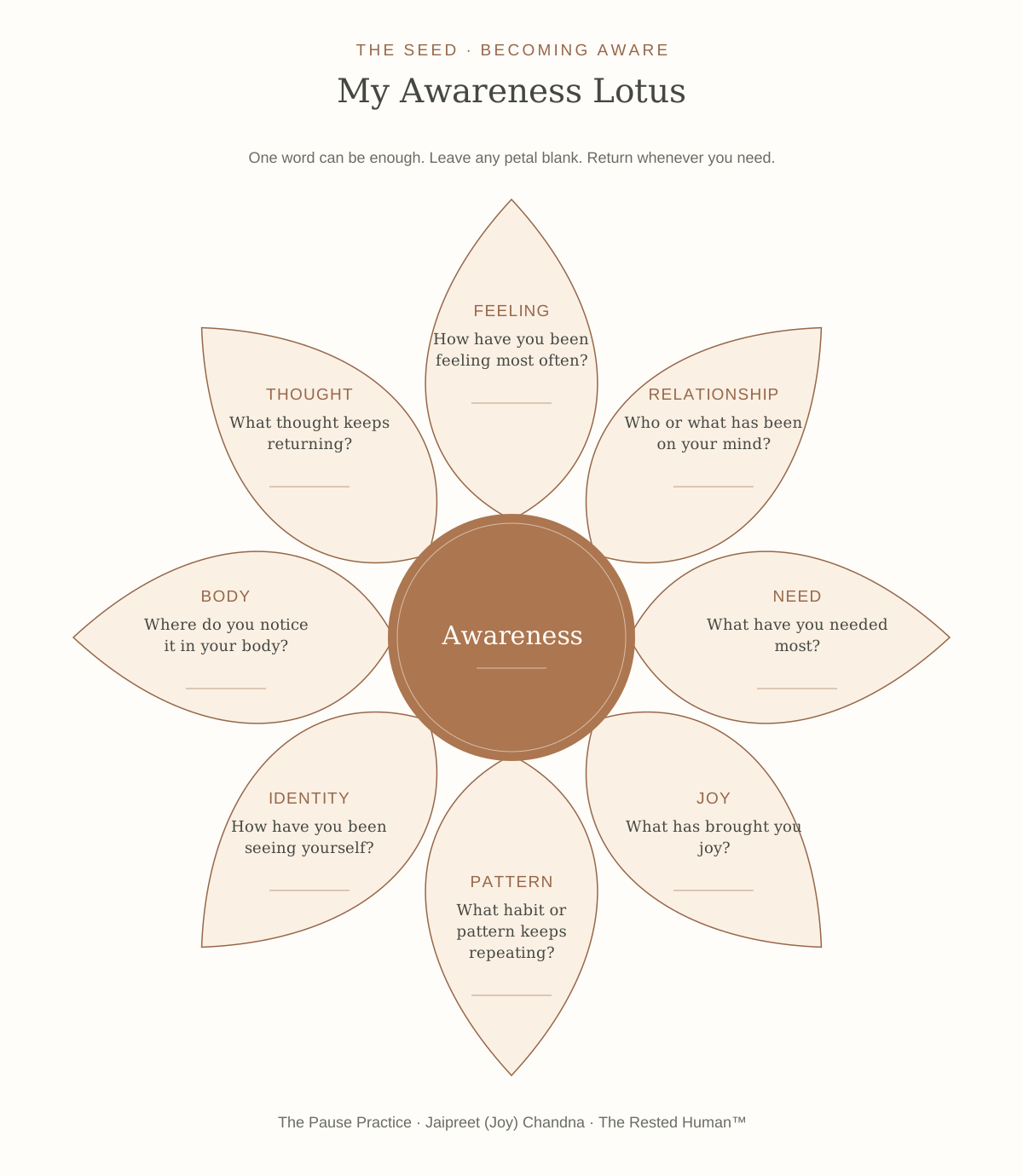
My Awareness Lotus

One word can be enough. Leave any petal blank. Return whenever you need.

My Awareness Lotus: an eight-petal reflection worksheet centred on awareness. Questions are available below.Open the full-size lotus

Explore the petals

Choose a petal to read its question. Write your word in your notebook.

Feeling

How have you been feeling most often?

Relationship

Who or what has been on your mind?

Need

What have you needed most?

Joy

What has brought you joy?

Pattern

What habit or pattern keeps repeating?

Identity

How have you been seeing yourself?

Body

Where do you notice it in your body?

Thought

What thought keeps returning?

Awareness can bring us closer to what lies beneath. If you feel ready, The Mud offers space to explore; you can also stay here.

Continue to The Mud

Entering the dark, gently

The Mud

Beneath the busyness, there may be feelings and old rules we have not had room to name. Here, we meet them with curiosity and compassion. You choose what to explore and what to leave for another day.

You set the depth. These reflections touch on shame, guilt and childhood. You can stay with the present, skip a question or choose a gentler stage. Visit The Sprout.

The Mud · Reflection 24 / 73

There were things I kept promising myself I would change. The way I said yes to everything. The way I put everyone else first. The way I kept going even when my body was begging me to stop. I knew. But knowing and actually changing are two very different things. It is simply about honesty.

Is there something you keep promising yourself you will change—but haven't yet?

Take this to your notebook. Stay only as long as feels supportive today.

A moment to integrate

Set your pen down and look around the room. Notice something familiar.

You do not need to resolve what you have written. Choose whether to rest, seek support or return another day.

The Mud · Reflection 25 / 73

I had a voice in my head that never stopped. You could do more. You should be further along. You are not enough. I didn't recognise it as guilt at the time. I just thought I needed to work harder, give more, be more. It followed me everywhere—into my relationships, my work, my quiet moments.

What thought keeps repeating in your mind that tells you you are not doing enough?

Take this to your notebook. Stay only as long as feels supportive today.

A moment to integrate

Set your pen down and look around the room. Notice something familiar.

You do not need to resolve what you have written. Choose whether to rest, seek support or return another day.

The Mud · Reflection 26 / 73

When I was in the hospital with my eyes swollen shut, angels showed up. Friends who drove me to appointments. People from my yoga community who brought food and prayers. Strangers who held space for me without asking anything in return. I didn't feel I deserved that level of care. I had always been the one who helped others. Receiving was something I had to learn.

Write about a time someone was kind to you when you didn't feel you deserved it. Were you able to receive it fully?

Take this to your notebook. Stay only as long as feels supportive today.

A moment to integrate

Set your pen down and look around the room. Notice something familiar.

You do not need to resolve what you have written. Choose whether to rest, seek support or return another day.

The Mud · Reflection 27 / 73

I grew up in a family that valued hard work. My parents were hardworking, dedicated people who also knew how to live fully—they showed me what work and life in balance actually looked like. But somewhere along the way I absorbed the belief that rest had to be earned. That stopping meant falling behind. I didn't learn this from one moment—it crept in slowly, from culture, from school, from the world around me.

Have you learned to believe that rest must be earned? If so, where might that belief have come from?

Take this to your notebook. Stay only as long as feels supportive today.

A moment to integrate

Set your pen down and look around the room. Notice something familiar.

You do not need to resolve what you have written. Choose whether to rest, seek support or return another day.

The Mud · Reflection 28 / 73

I would never speak to a friend the way I spoke to myself. If a friend told me she was exhausted and overwhelmed, I would hold her with so much compassion. But when I was exhausted and overwhelmed, I told myself to push through, to do better, to stop complaining. The double standard was enormous.

What do you judge yourself for that you would never judge a friend for?

Take this to your notebook. Stay only as long as feels supportive today.

A moment to integrate

Set your pen down and look around the room. Notice something familiar.

You do not need to resolve what you have written. Choose whether to rest, seek support or return another day.

The Mud · Reflection 29 / 73

I used to replay certain moments over and over. Things I said, decisions I made, times I let people down. I would apologise to myself for them a hundred times. Meanwhile the people involved had long since moved on. The only person still holding it was me.

What are you still apologising for inside yourself? What would it mean to meet that memory with compassion?

Take this to your notebook. Stay only as long as feels supportive today.

A moment to integrate

Set your pen down and look around the room. Notice something familiar.

You do not need to resolve what you have written. Choose whether to rest, seek support or return another day.

The Mud · Reflection 30 / 73

Learning to be gentle with myself was one of the hardest things I ever did. I had been so hard on myself for so long that softness felt almost foreign. But slowly, through my healing journey, I began to understand that the same compassion I gave so freely to others was something I deserved too.

What would it feel like to stop being so hard on yourself? What would actually change?

Take this to your notebook. Stay only as long as feels supportive today.

A moment to integrate

Set your pen down and look around the room. Notice something familiar.

You do not need to resolve what you have written. Choose whether to rest, seek support or return another day.

The Mud · Reflection 31 / 73

I found that meeting my shame with compassion began to soften its hold on me. Not to fix it or explain it away—just to acknowledge it. To say, “I see you. I hear you. I am holding you with love today.” That was enough to begin to loosen its grip.

Is there any shame or guilt you feel ready to acknowledge today? Share only what feels manageable in your notebook. If it feels right, add: I am holding this with love today.

Take this to your notebook. Stay only as long as feels supportive today.

A moment to integrate

Set your pen down and look around the room. Notice something familiar.

You do not need to resolve what you have written. Choose whether to rest, seek support or return another day.

The Mud · Reflection 32 / 73

When I began exploring my childhood experiences, one of the first questions I was asked was, “When did you feel safe as a child?” I had to sit with that question for a long time. Safety for me was found in small moments. In the warmth of my family home. In the kitchen with my Mom. In prayer. In nature.

Can you recall a small moment of feeling safe, in childhood or more recently? If no memory comes to mind, what might help you feel supported now?

Take this to your notebook. Stay only as long as feels supportive today.

A moment to integrate

Set your pen down and look around the room. Notice something familiar.

You do not need to resolve what you have written. Choose whether to rest, seek support or return another day.

The Mud · Reflection 33 / 73

I was the capable one. The one who held things together. The one who didn't need much. I learned early that being capable, being helpful, being strong was how I earned my place. I didn't even realise I had learned this—it just became who I was. It wasn't until my healing journey that I began to see how much of my adult life was still being run by that little girl trying to earn her place.

Did you feel you had to take on a particular role in your family to be loved or accepted? If so, what was that role?

Take this to your notebook. Stay only as long as feels supportive today.

A moment to integrate

Set your pen down and look around the room. Notice something familiar.

You do not need to resolve what you have written. Choose whether to rest, seek support or return another day.

The Mud · Reflection 34 / 73

Nobody told me directly that rest was lazy. But I absorbed it anyway. From the culture around me, from watching the adults in my life, from what was praised and what was ignored. Hard work was celebrated. Stillness was suspicious. I carried those unspoken rules into my adult life without ever questioning them.

What unspoken messages about rest did you absorb as a child? Do any still influence you today?

Take this to your notebook. Stay only as long as feels supportive today.

A moment to integrate

Set your pen down and look around the room. Notice something familiar.

You do not need to resolve what you have written. Choose whether to rest, seek support or return another day.

The Mud · Reflection 35 / 73

For a long time I didn't realise that the voice telling me to do more, be more, give more wasn't actually my voice. It was a collection of voices I had absorbed over years—from family, from culture, from relationships, from a world that rewards productivity above everything else. Separating my own voice from all of those took time and deep inner work.

Are there expectations or voices you have mistaken for your own? What do you notice when you listen for your own perspective?

Take this to your notebook. Stay only as long as feels supportive today.

A moment to integrate

Set your pen down and look around the room. Notice something familiar.

You do not need to resolve what you have written. Choose whether to rest, seek support or return another day.

The Mud · Reflection 36 / 73

Writing a letter to my younger self was one of the most healing things I did on my inner child journey. I thought about that little girl—so eager to help, so determined to be enough, so busy trying to earn her place. And I just wanted to hold her and tell her she was already enough exactly as she was. Let it come from love.

If it feels right, write a letter to your ten-year-old self, or to yourself at another age. Offer love rather than advice. What would you like that younger you to know?

Take this to your notebook. Stay only as long as feels supportive today.

A moment to integrate

Set your pen down and look around the room. Notice something familiar.

You do not need to resolve what you have written. Choose whether to rest, seek support or return another day.

The Mud · Reflection 37 / 73

I remember the feeling of being praised for achieving something. The gold star, the good grade, the approval in someone's eyes. It felt so good. And quietly, without anyone saying it directly, I learned that this was how I earned love and belonging. Through doing. Through achieving. Through being useful. That lesson stayed with me for decades.

Have you ever felt that your worth depended on what you produced or achieved? When do you remember first feeling that way?

Take this to your notebook. Stay only as long as feels supportive today.

A moment to integrate

Set your pen down and look around the room. Notice something familiar.

You do not need to resolve what you have written. Choose whether to rest, seek support or return another day.

The Mud · Reflection 38 / 73

This prompt took me a long time to sit with honestly. Not because my childhood was terrible—it wasn't. I had love and family and so much to be grateful for. But there were things I needed that I didn't always know how to ask for. Stillness. Permission to not be okay. Someone to tell me I was enough just as I was without having to do anything. Understanding what I needed then helped me understand so much about my patterns now.

Was there something you needed as a child that you did not always receive? If you want to explore it, how does that need show up today? What support could help you meet it now?

Take this to your notebook. Stay only as long as feels supportive today.

A moment to integrate

Set your pen down and look around the room. Notice something familiar.

You do not need to resolve what you have written. Choose whether to rest, seek support or return another day.

The Mud · Reflection 39 / 73

When I finally met my inner child in my healing work, I just wanted to hold her. That little girl who learned so early to put everyone else first. Who learned that her needs were too much. Who learned to shrink herself to fit. That was all she knew at the time. I wanted her to know that she was safe now. That she didn't have to work so hard anymore. That she was loved exactly as she was.

If you recognise a younger version of yourself who set aside their own needs, what would you like to say to them today?

Take this to your notebook. Stay only as long as feels supportive today.

A moment to integrate

Set your pen down and look around the room. Notice something familiar.

You do not need to resolve what you have written. Choose whether to rest, seek support or return another day.

Gather what you noticed

What kept coming up?

Look back at your writing in The Mud. You can answer with a word, a sentence or simply a moment of noticing.

  • The feeling that came up most often
  • A pattern I noticed in myself
  • Something I was surprised to write
  • One word that captures this stage
  • One thing I am grateful for from this stage

Your mud reflection lotus

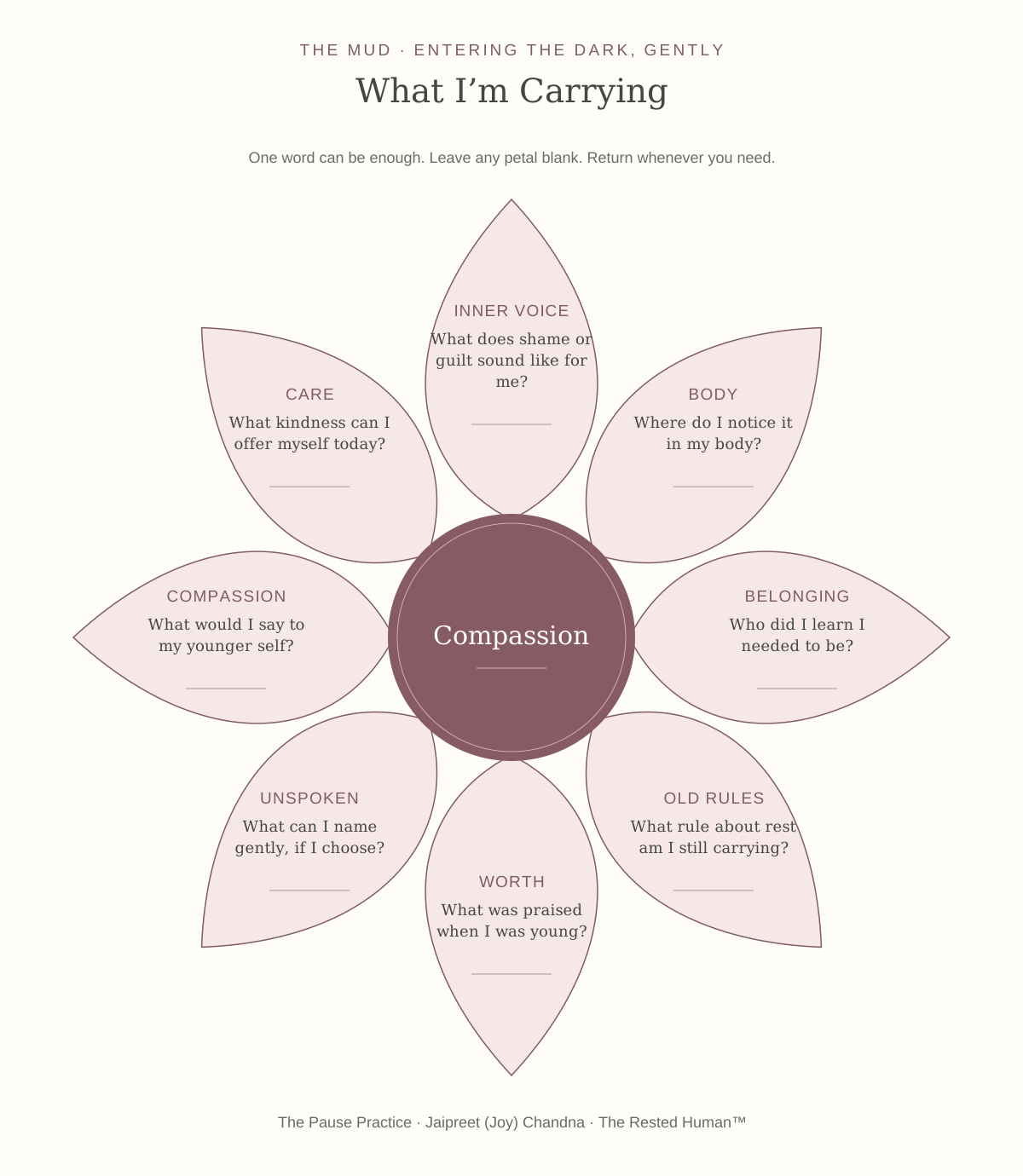
What I’m Carrying

One word can be enough. Leave any petal blank. Return whenever you need.

What I’m Carrying: an eight-petal reflection worksheet centred on compassion. Questions are available below.Open the full-size lotus

Explore the petals

Choose a petal to read its question. Write your word in your notebook.

Inner voice

What does shame or guilt sound like for me?

Body

Where do I notice it in my body?

Belonging

Who did I learn I needed to be?

Old rules

What rule about rest am I still carrying?

Worth

What was praised when I was young?

Unspoken

What can I name gently, if I choose?

Compassion

What would I say to my younger self?

Care

What kindness can I offer myself today?

You do not need to uncover or resolve everything before taking a small step. The Sprout turns toward care in the present.

Continue to The Sprout

Finding a way

The Sprout

A pause before a yes. A small act of care. An afternoon with room to breathe. We begin to notice the choices available in ordinary moments.

The Sprout · Reflection 40 / 73

I used to fill every gap in my day with something useful. Even my free time had a purpose. Learning to add something to my day purely for the joy of it felt almost rebellious at first. One of the small practices that helped me come back to myself was buying myself flowers every week. Not for anyone else. Just for me. Just because I deserved that small act of beauty and care.

If you could add one thing to today that had nothing to do with work or responsibilities—what would it be? What small act of care could you give yourself this week?

Take this to your notebook. Stay only as long as feels supportive today.

A moment to integrate

Set your pen down and notice the support beneath you.

If you wish, choose one small act of care from your writing. It can wait until you have the time and capacity.

The Sprout · Reflection 41 / 73

I was always rushing. From one thing to the next, one city to the next, one commitment to the next. I told myself I was driven, ambitious, passionate. And I was. But I was also running. It took me a long time to ask myself honestly—what was I rushing away from?

What are you rushing toward—and what are you rushing away from?

Take this to your notebook. Stay only as long as feels supportive today.

A moment to integrate

Set your pen down and notice the support beneath you.

If you wish, choose one small act of care from your writing. It can wait until you have the time and capacity.

The Sprout · Reflection 42 / 73

Speed was my comfort zone. As long as I was moving fast enough, I didn't have to feel what was underneath. I also fractured my left foot twice during those years. Even then, I found it difficult to stop. Slowing down felt unsafe. But there was always something I kept meaning to slow down for. Something that kept getting pushed to later.

What is one thing you keep saying you will slow down for—but haven't yet?

Take this to your notebook. Stay only as long as feels supportive today.

A moment to integrate

Set your pen down and notice the support beneath you.

If you wish, choose one small act of care from your writing. It can wait until you have the time and capacity.

The Sprout · Reflection 43 / 73

I spent years surrounding myself with people who needed things from me. I was the helper, the fixer, the one who always showed up. And I loved that. But I didn't always notice the difference between the relationships that filled me up and the ones that quietly emptied me. Learning to notice that difference was an important part of my healing.

Think about the people you spend the most time with. Who leaves you feeling energised? Who leaves you feeling depleted?

Take this to your notebook. Stay only as long as feels supportive today.

A moment to integrate

Set your pen down and notice the support beneath you.

If you wish, choose one small act of care from your writing. It can wait until you have the time and capacity.

The Sprout · Reflection 44 / 73

I remember the first time I had a completely free afternoon in Dharamshala with nothing I had to do. No retreats to plan, no emails to answer, no one to help. I didn't know what to do with myself at first. I sat with a cup of chai and just looked at the mountains. And slowly something in me began to breathe again.

If this afternoon had no obligations in it—what would you actually do? Let yourself imagine it. What would you choose?

Take this to your notebook. Stay only as long as feels supportive today.

A moment to integrate

Set your pen down and notice the support beneath you.

If you wish, choose one small act of care from your writing. It can wait until you have the time and capacity.

The Sprout · Reflection 45 / 73

For most of my life I avoided my feelings by staying busy. If I kept moving, I didn't have to feel anything. But eventually I had no choice. My body stopped me. The world stopped me. And all those feelings I had been outrunning were right there waiting. Feeling them was the beginning of everything. This prompt is a gentle invitation to just feel.

What are you feeling right now—underneath all the doing?

Take this to your notebook. Stay only as long as feels supportive today.

A moment to integrate

Set your pen down and notice the support beneath you.

If you wish, choose one small act of care from your writing. It can wait until you have the time and capacity.

The Sprout · Reflection 46 / 73

I overrode myself constantly. Said yes when I meant no. Pushed through when I needed to stop. Smiled when I was exhausted. I didn't even notice I was doing it most of the time—it had become so automatic.

Was there a moment today when you set aside your own needs? What was happening, and what might have supported you?

Take this to your notebook. Stay only as long as feels supportive today.

A moment to integrate

Set your pen down and notice the support beneath you.

If you wish, choose one small act of care from your writing. It can wait until you have the time and capacity.

The Sprout · Reflection 47 / 73

I used to think self-care had to be big. A holiday, a spa day, a complete life overhaul. But the most healing things I did for myself were tiny. A cup of chai made slowly. Five minutes sitting in the sun. A short walk with no destination. It was the accumulation of these small acts that began to change everything.

What is the smallest possible act of care you could do for yourself in the next hour?

Take this to your notebook. Stay only as long as feels supportive today.

A moment to integrate

Set your pen down and notice the support beneath you.

If you wish, choose one small act of care from your writing. It can wait until you have the time and capacity.

The Sprout · Reflection 48 / 73

I never felt like enough was enough. There was always one more thing to do, one more person to help, one more goal to reach. The finish line kept moving. I didn't realise how exhausting that was until I finally stopped and asked myself—what would actually be enough today? Just for today.

What would enough look like for you today?

Take this to your notebook. Stay only as long as feels supportive today.

A moment to integrate

Set your pen down and notice the support beneath you.

If you wish, choose one small act of care from your writing. It can wait until you have the time and capacity.

The Sprout · Reflection 49 / 73

I was my own harshest critic. I could write a long list of everything I hadn't done, everything I had missed, everything I should have done better. But one small thing I did well? That was much harder to find. Learning to acknowledge myself—even for the smallest things—was part of learning to be kinder to myself.

What is one thing you did well today—however small?

Take this to your notebook. Stay only as long as feels supportive today.

A moment to integrate

Set your pen down and notice the support beneath you.

If you wish, choose one small act of care from your writing. It can wait until you have the time and capacity.

Gather what you noticed

What kept coming up?

Look back at your writing in The Sprout. You can answer with a word, a sentence or simply a moment of noticing.

  • The feeling that came up most often
  • A pattern I noticed in myself
  • Something I was surprised to write
  • One word that captures this stage
  • One thing I am grateful for from this stage

Your sprout reflection lotus

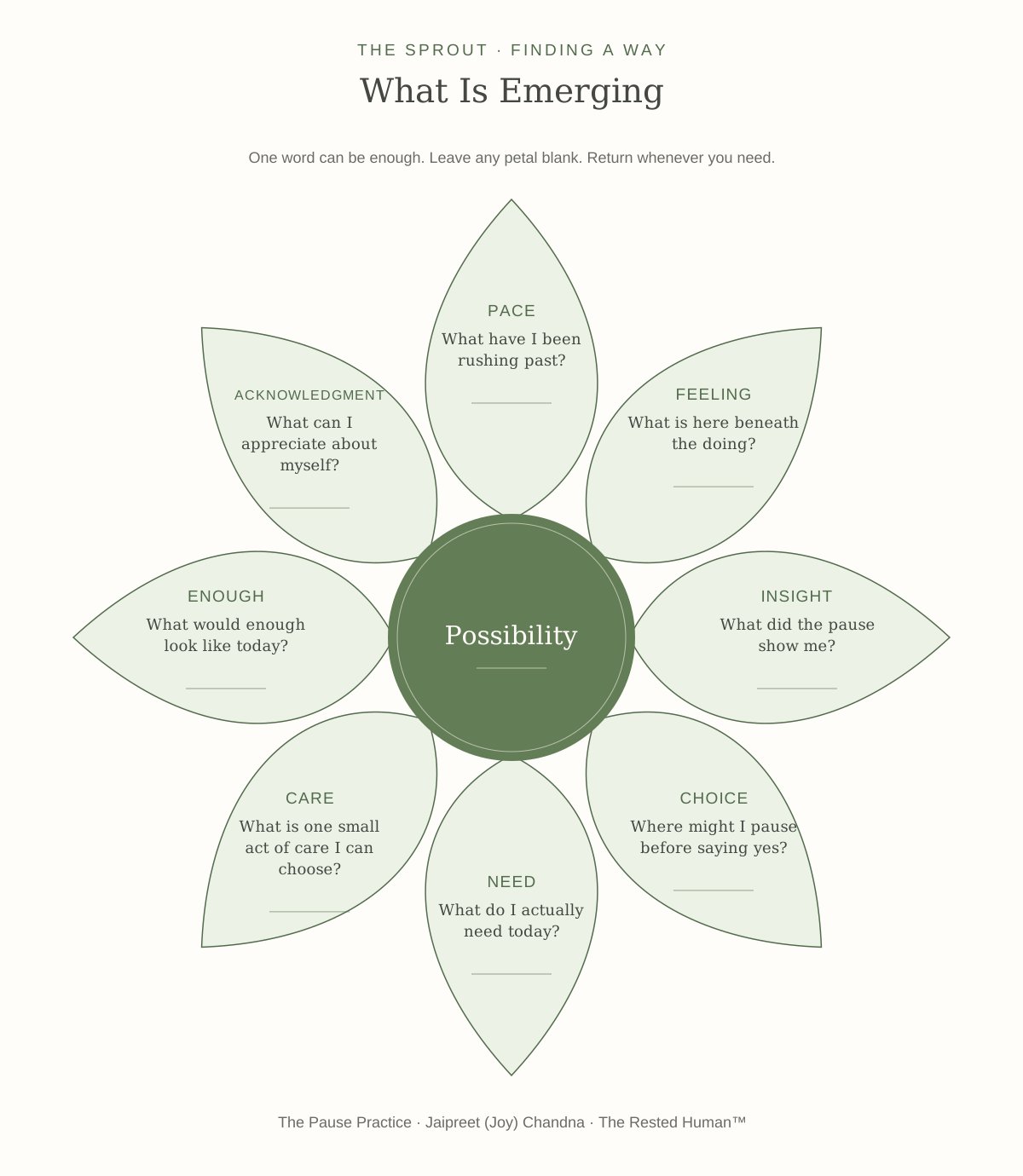
What Is Emerging

One word can be enough. Leave any petal blank. Return whenever you need.

What Is Emerging: an eight-petal reflection worksheet centred on possibility. Questions are available below.Open the full-size lotus

Explore the petals

Choose a petal to read its question. Write your word in your notebook.

Pace

What have I been rushing past?

Feeling

What is here beneath the doing?

Insight

What did the pause show me?

Choice

Where might I pause before saying yes?

Need

What do I actually need today?

Care

What is one small act of care I can choose?

Enough

What would enough look like today?

Acknowledgment

What can I appreciate about myself?

Small choices need support. The Rising explores the relationships, boundaries and daily conditions that help make room for them.

Continue to The Rising

Moving toward light

The Rising

What deserves your care and protection? We explore boundaries, receiving, relationships and the possibility of making room for what matters.

The Rising · Reflection 50 / 73

I had so many commitments in my life that I had never consciously chosen. They had just accumulated over time. Volunteer roles, relationships, obligations that I kept showing up for out of habit or guilt rather than genuine desire. It wasn't until I stopped and asked myself—do I actually want this?—that I began to see how much of my life was running on autopilot.

What are you continuing in your life out of habit rather than genuine choice?

Take this to your notebook. Stay only as long as feels supportive today.

A moment to integrate

Set your pen down and let your attention return to the room.

Notice whether there is a boundary, a request or a source of support you want to return to. No decision is required now.

The Rising · Reflection 51 / 73

Resentment was something I didn't want to admit I felt. It didn't fit with the image I had of myself as someone who loved to serve and help. But it was there. A quiet bitterness that crept in when I had given too much for too long. When I finally got honest about it, I realised that my resentment was simply pointing to a need that wasn't being met.

What do you resent right now—and what is that feeling trying to tell you?

Take this to your notebook. Stay only as long as feels supportive today.

A moment to integrate

Set your pen down and let your attention return to the room.

Notice whether there is a boundary, a request or a source of support you want to return to. No decision is required now.

The Rising · Reflection 52 / 73

I was always the one who remembered. The birthdays, the check-ins, the small acts of thoughtfulness. I gave care so naturally and so freely. But quietly, underneath all that giving, there was a longing to be cared for in the same way. To have someone notice without me having to ask. To receive what I so easily gave.

What is something you do for others that you wish someone would do for you?

Take this to your notebook. Stay only as long as feels supportive today.

A moment to integrate

Set your pen down and let your attention return to the room.

Notice whether there is a boundary, a request or a source of support you want to return to. No decision is required now.

The Rising · Reflection 53 / 73

There was a time in Dharamshala when I had nothing I had to do. No retreats to run, no emails to answer, no one needing anything from me. And I remember sitting with that feeling—the strange discomfort of just being. No role, no purpose, no output. Just me. It felt uncomfortable at first. And then slowly, beautifully, it began to feel like coming home.

What would it feel like to just be a human being today—not a human doing?

Take this to your notebook. Stay only as long as feels supportive today.

A moment to integrate

Set your pen down and let your attention return to the room.

Notice whether there is a boundary, a request or a source of support you want to return to. No decision is required now.

The Rising · Reflection 54 / 73

I realised at some point that my work and my commitments were getting the best of me—my energy, my creativity, my full presence. And the people I loved most were getting whatever was left at the end of the day. Which wasn't much. That realisation was painful. But it was also the beginning of something important shifting.

Who or what gets the best of you right now—and who gets what is left?

Take this to your notebook. Stay only as long as feels supportive today.

A moment to integrate

Set your pen down and let your attention return to the room.

Notice whether there is a boundary, a request or a source of support you want to return to. No decision is required now.

The Rising · Reflection 55 / 73

I had a long list of things I was going to do when things slowed down. Travel slowly. Learn something just for the joy of it. Spend more time with the people I loved. Rest properly. But things rarely slowed down on their own, and I found it difficult to make space. The list just kept growing while the years kept passing.

What is something you keep postponing until life slows down? Is there a small, realistic way to make room for it now?

Take this to your notebook. Stay only as long as feels supportive today.

A moment to integrate

Set your pen down and let your attention return to the room.

Notice whether there is a boundary, a request or a source of support you want to return to. No decision is required now.

The Rising · Reflection 56 / 73

In the middle of my healing journey I began to notice the people who made me feel most alive and most myself. The ones I could be completely honest with. The ones who didn't need me to perform or achieve or hold it together. The ones who just loved me as I was. Those relationships became my anchors.

Who in your life makes you feel most like yourself? What is it about them that brings out the real you?

Take this to your notebook. Stay only as long as feels supportive today.

A moment to integrate

Set your pen down and let your attention return to the room.

Notice whether there is a boundary, a request or a source of support you want to return to. No decision is required now.

The Rising · Reflection 57 / 73

I used to wish someone would just notice. Notice that I was tired. Notice that I was carrying too much. Notice that underneath all the capability and competence there was a person who needed care too. But I had become so good at looking fine that no one could see past the performance. And I was too proud—or too tired—to ask.

Is there something you are carrying right now that you wish someone close to you could see—without you having to explain it?

Take this to your notebook. Stay only as long as feels supportive today.

A moment to integrate

Set your pen down and let your attention return to the room.

Notice whether there is a boundary, a request or a source of support you want to return to. No decision is required now.

The Rising · Reflection 58 / 73

When I finally slowed down enough to ask myself what truly mattered to me, the answer surprised me. It wasn't the achievements or the commitments or the projects. It was the simple things. The relationships. The morning quiet. The sunset and the sunrise. The feeling of being present in my own life.

What in your life feels most precious to you right now? What would you want to make sure never gets lost in the busyness?

Take this to your notebook. Stay only as long as feels supportive today.

A moment to integrate

Set your pen down and let your attention return to the room.

Notice whether there is a boundary, a request or a source of support you want to return to. No decision is required now.

The Rising · Reflection 59 / 73

Learning to say yes only to what felt genuinely right was one of the most liberating practices of my healing journey. It didn't happen overnight. But slowly, as I began to trust myself more, my yes became more intentional and my no became more peaceful.

Where could you make more room for an honest yes or no, alongside the responsibilities you need to keep?

Take this to your notebook. Stay only as long as feels supportive today.

A moment to integrate

Set your pen down and let your attention return to the room.

Notice whether there is a boundary, a request or a source of support you want to return to. No decision is required now.

Gather what you noticed

What kept coming up?

Look back at your writing in The Rising. You can answer with a word, a sentence or simply a moment of noticing.

  • The feeling that came up most often
  • A pattern I noticed in myself
  • Something I was surprised to write
  • One word that captures this stage
  • One thing I am grateful for from this stage

Your rising reflection lotus

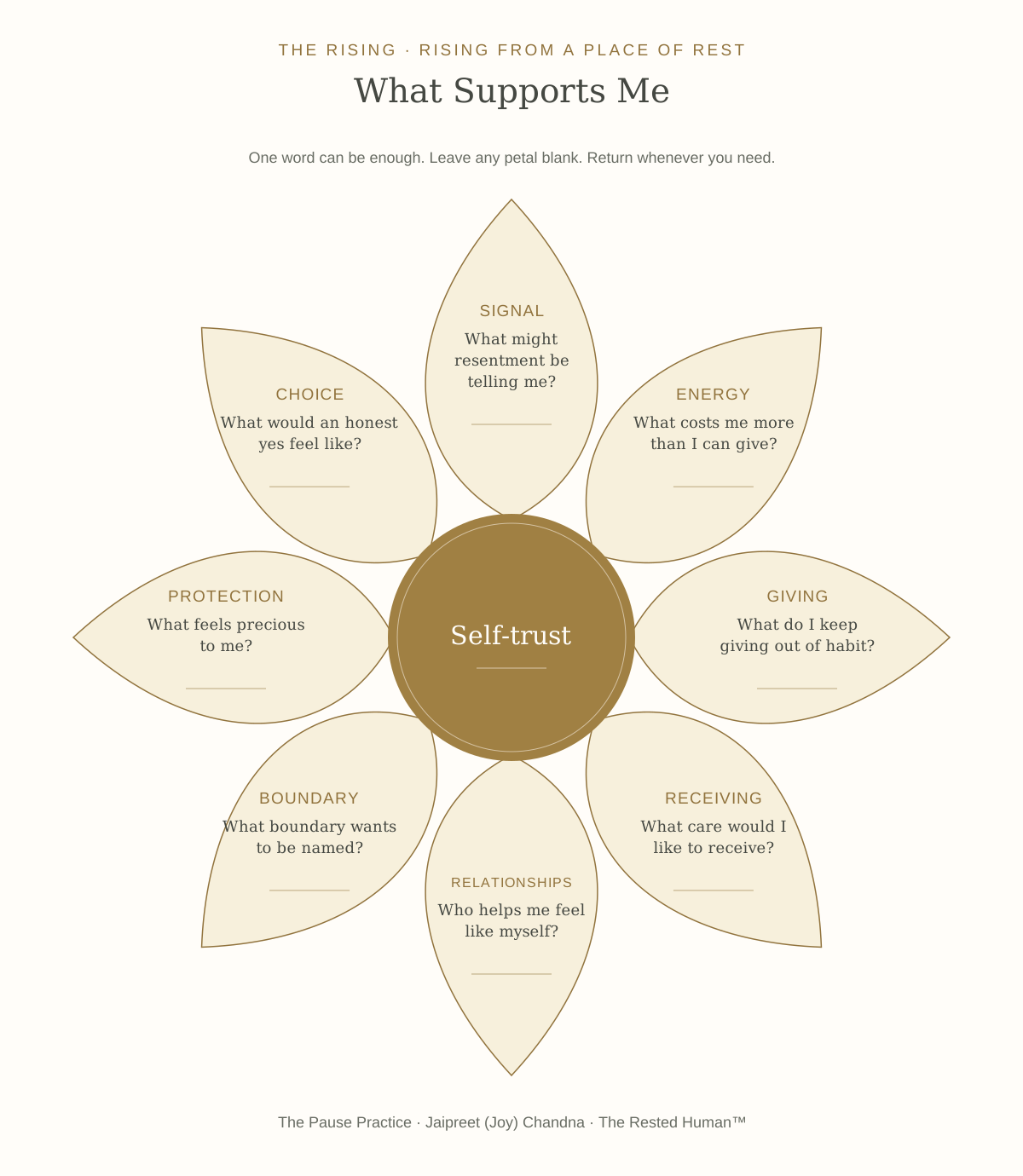
What Supports Me

One word can be enough. Leave any petal blank. Return whenever you need.

What Supports Me: an eight-petal reflection worksheet centred on self-trust. Questions are available below.Open the full-size lotus

Explore the petals

Choose a petal to read its question. Write your word in your notebook.

Signal

What might resentment be telling me?

Energy

What costs me more than I can give?

Giving

What do I keep giving out of habit?

Receiving

What care would I like to receive?

Relationships

Who helps me feel like myself?

Boundary

What boundary wants to be named?

Protection

What feels precious to me?

Choice

What would an honest yes feel like?

With room for care and support, we turn toward joy, presence and what we want to carry into everyday life.

Continue to The Bloom

Returning to yourself

The Bloom

There is a person beneath the roles and the doing. Here, we make room for joy, identity, presence and the practices we want to carry into everyday life.

The Bloom · Reflection 60 / 73

I remember the first time I truly asked myself this question. Who am I when nothing needs me? I had been so many things to so many people for so long—the teacher, the retreat leader, the helper, the friend who always showed up—that I had lost track of who I was underneath all of those roles. There is no right answer. Just honest noticing.

Who are you when nothing needs you? Not your role, not your title, not your function. Just you.

Take this to your notebook. Stay only as long as feels supportive today.

A moment to integrate

Set your pen down. Notice what you would like to carry into the rest of your day.

A word, a feeling or a small intention can be enough. You may also leave the page as it is.

The Bloom · Reflection 61 / 73

I used to define myself entirely by what I did. My work, my commitments, my achievements. But the people who truly loved me didn't love me for any of that. They loved me for who I was—my warmth, my spirit, my laugh, the way I showed up for them. When I began to see myself through their eyes, it changed something in me.

What three words would the people who love you most use to describe you—not your work, just you?

Take this to your notebook. Stay only as long as feels supportive today.

A moment to integrate

Set your pen down. Notice what you would like to carry into the rest of your day.

A word, a feeling or a small intention can be enough. You may also leave the page as it is.

The Bloom · Reflection 62 / 73

As a child, I loved to dance. I loved music. I loved being in nature. I loved sitting with my family and just being together with no agenda. None of it had a purpose. None of it produced anything. It was just pure joy. Somewhere along the way I stopped making time for those things because they weren't useful enough.

What did you love as a child—before everything had to have a purpose?

Take this to your notebook. Stay only as long as feels supportive today.

A moment to integrate

Set your pen down. Notice what you would like to carry into the rest of your day.

A word, a feeling or a small intention can be enough. You may also leave the page as it is.

The Bloom · Reflection 63 / 73

I noticed something in myself over the years. When things were going really well—when I felt genuinely happy and full of joy—I would unconsciously begin to dim it. As if getting too happy was unsafe. As if joy was something that would be taken away if I let myself feel it fully. I learned this somewhere early.

Have you ever held back your joy for fear of losing it? If so, what did you notice? You do not need to know where that feeling began.

Take this to your notebook. Stay only as long as feels supportive today.

A moment to integrate

Set your pen down. Notice what you would like to carry into the rest of your day.

A word, a feeling or a small intention can be enough. You may also leave the page as it is.

The Bloom · Reflection 64 / 73

As an adult, there were things I loved that slowly slipped away. Not because I stopped loving them—but because life got full and I stopped prioritising myself. A creative hobby. A friendship I kept meaning to nurture. A practice that used to fill me up.

What is something you loved doing in recent years that has quietly slipped away? What got in the way?

Take this to your notebook. Stay only as long as feels supportive today.

A moment to integrate

Set your pen down. Notice what you would like to carry into the rest of your day.

A word, a feeling or a small intention can be enough. You may also leave the page as it is.

The Bloom · Reflection 65 / 73

I realised at some point that I had forgotten what I actually found pleasurable. Everything in my life had a purpose. Even my downtime was productive in some way. Learning to ask myself, “What do I enjoy, just for the sake of enjoying it?” felt almost revolutionary. A good meal eaten slowly. Music that moves me. A conversation that goes nowhere in particular.

What do you find purely pleasurable—something just for the joy of it?

Take this to your notebook. Stay only as long as feels supportive today.

A moment to integrate

Set your pen down. Notice what you would like to carry into the rest of your day.

A word, a feeling or a small intention can be enough. You may also leave the page as it is.

The Bloom · Reflection 66 / 73

One of the practices that helped me most was closing my eyes and imagining how I wanted to feel—not what I wanted to achieve, not what I wanted to have, but how I wanted to feel in my body, in my relationships, in my daily life. And then anchoring into that feeling as if it were already here.

How would you like to feel one year from now? With your eyes open or closed, take a comfortable breath and imagine an ordinary day. Describe it in your notebook.

Take this to your notebook. Stay only as long as feels supportive today.

A moment to integrate

Set your pen down. Notice what you would like to carry into the rest of your day.

A word, a feeling or a small intention can be enough. You may also leave the page as it is.

The Bloom · Reflection 67 / 73

I spent years on autopilot. Moving from one thing to the next without really arriving anywhere. Even beautiful moments passed by without me fully being in them. Learning to be present—really present—in the ordinary moments of my day was one of the most important shifts of my healing journey.

What is one thing you want to stop moving through on autopilot and start being truly present for?

Take this to your notebook. Stay only as long as feels supportive today.

A moment to integrate

Set your pen down. Notice what you would like to carry into the rest of your day.

A word, a feeling or a small intention can be enough. You may also leave the page as it is.

The Bloom · Reflection 68 / 73

For most of my life I only rested when I had no choice. When my body forced me to stop. When illness or exhaustion made continuing impossible. I didn't know what gentle daily care looked like because I had never practised it before a crisis. Learning to care for myself as a daily habit—not an emergency measure—changed everything.

What would gentle daily care look like for you—as a habit, not a crisis response?

Take this to your notebook. Stay only as long as feels supportive today.

A moment to integrate

Set your pen down. Notice what you would like to carry into the rest of your day.

A word, a feeling or a small intention can be enough. You may also leave the page as it is.

The Bloom · Reflection 69 / 73

I returned to burnout more than once. Even after losing my eyesight. Even after being locked down in Dharamshala with nowhere to go and nothing to do. Even after everything I had been through. I still found ways to take on too much again. I had to get honest with myself about why. For me, it was tied to worth. To feeling needed. To an old belief that more was always better. Understanding the root of the cycle was what finally began to change it.

If you find yourself taking on too much again, what seems to draw you back? Consider the beliefs, expectations or practical pressures involved.

Take this to your notebook. Stay only as long as feels supportive today.

A moment to integrate

Set your pen down. Notice what you would like to carry into the rest of your day.

A word, a feeling or a small intention can be enough. You may also leave the page as it is.

The Bloom · Reflection 70 / 73

Spending time in the Himalayas taught me so much about rest. The mountains don't justify themselves. The seasons don't explain their rhythms. Growth and rest both belong to those rhythms. Nature was my greatest teacher in learning that rest doesn't have to be earned. It is simply part of the cycle.

Nature moves through seasons of growth and rest. What would it mean if your rest did not have to be earned?

Take this to your notebook. Stay only as long as feels supportive today.

A moment to integrate

Set your pen down. Notice what you would like to carry into the rest of your day.

A word, a feeling or a small intention can be enough. You may also leave the page as it is.

The Bloom · Reflection 71 / 73

Whether you have explored every stage or spent time with a single question, you may have noticed something you want to carry with you. An intention can be small. Listen to what matters to you now, without asking yourself to change everything at once.

From whatever you have noticed so far, what is one intention you would like to carry into daily life?

Take this to your notebook. Stay only as long as feels supportive today.

A moment to integrate

Set your pen down. Notice what you would like to carry into the rest of your day.

A word, a feeling or a small intention can be enough. You may also leave the page as it is.

The Bloom · Reflection 72 / 73

I waited a long time for permission. Permission to slow down. Permission to say no. Permission to put myself first. Permission to rest without guilt. I kept looking for it from other people—from my work, my relationships, the world around me. Over time, I began to see that I could also offer myself permission, even while learning to ask for the support I needed.

Write the permission you have been waiting for someone else to give you. Word for word. Then sign your own name at the bottom.

Take this to your notebook. Stay only as long as feels supportive today.

A moment to integrate

Set your pen down. Notice what you would like to carry into the rest of your day.

A word, a feeling or a small intention can be enough. You may also leave the page as it is.

The Bloom · Reflection 73 / 73

You have reached the final reflection. Or perhaps you arrived here first. Either way, you are welcome. There is no answer you need to arrive at. Let your own words describe what being a rested human means to you today.

What does it mean to be a rested human—in your own words?

Take this to your notebook. Stay only as long as feels supportive today.

A moment to integrate

Set your pen down. Notice what you would like to carry into the rest of your day.

A word, a feeling or a small intention can be enough. You may also leave the page as it is.

Gather what you noticed

What kept coming up?

Look back at your writing in The Bloom. You can answer with a word, a sentence or simply a moment of noticing.

  • The feeling that came up most often
  • A pattern I noticed in myself
  • Something I was surprised to write
  • One word that captures this stage
  • One thing I am grateful for from this stage

Your bloom reflection lotus

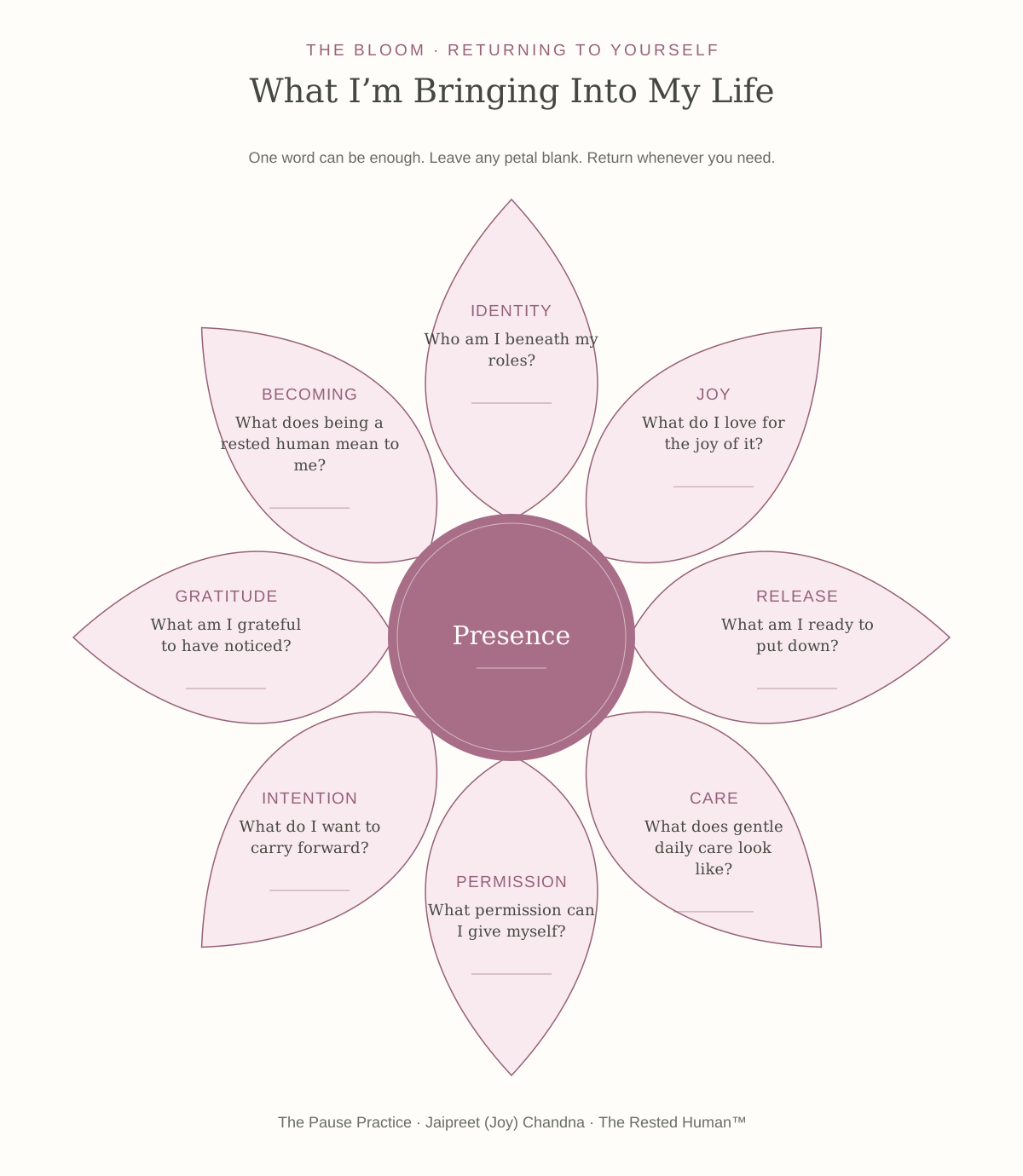
What I’m Bringing Into My Life

One word can be enough. Leave any petal blank. Return whenever you need.

What I’m Bringing Into My Life: an eight-petal reflection worksheet centred on presence. Questions are available below.Open the full-size lotus

Explore the petals

Choose a petal to read its question. Write your word in your notebook.

Identity

Who am I beneath my roles?

Joy

What do I love for the joy of it?

Release

What am I ready to put down?

Care

What does gentle daily care look like?

Permission

What permission can I give myself?

Intention

What do I want to carry forward?

Gratitude

What am I grateful to have noticed?

Becoming

What does being a rested human mean to me?

One journey · Five reflection lotuses

Notice what
is taking shape.

These lotuses are places to pause, not scores to improve. You may find the same word returns. You may leave a petal blank. You may return to a different stage tomorrow.

Sketch a lotus in your notebook, or write the petal names as a list. Let your words be enough.

What this journey gave me

Pause for gratitude.

With love from the Himalayas

You are a human being,
not a human doing.

Thank you for making time for yourself.
You are loved. You are enough.

Jaipreet (Joy) Chandna
The Rested Human™

Return to the five stages